Facts
The facts behind your purchases.
Coffee, chocolate, cotton. Here is what is really behind the things you buy, all of it sourced. Filter by what you care about.
people live off coffee
About 125 million people depend on coffee for their income.
grown by small farmers
Roughly 60% of the world's coffee comes from small family farms.
cups a day
The world drinks around two billion cups of coffee every day.
countries grow it
Coffee is grown in about 70 countries, almost all near the equator.
of a cafe coffee
A grower can keep as little as 3% of what you pay for a cafe coffee.
price swings in a year
Coffee prices can swing by half or more in a single year.
of wild coffee at risk
About 60% of wild coffee species are threatened with extinction.
smallholder farms
An estimated 25 million smallholder farmers grow most of the world's coffee.
the great price crash
In 2001 coffee prices hit a 30-year low and pushed millions into poverty.
children in cocoa fields
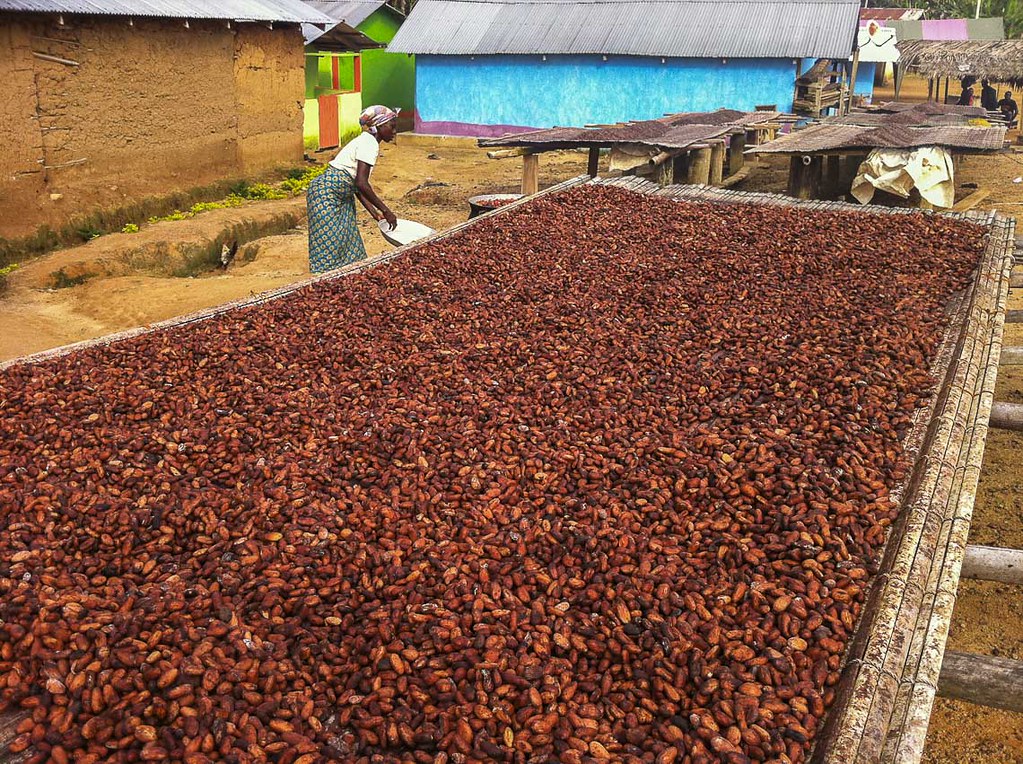
An estimated 1.5 million children work on cocoa farms in Côte d'Ivoire and Ghana.
of cocoa is West African
About 70% of the world's cocoa is grown in West Africa.
of a chocolate bar
Cocoa farmers often receive around 6% of the price of a chocolate bar.
a day, for many
Many cocoa farmers live on roughly a dollar a day, below a living income.
from small farms
Around 90% of cocoa is grown on small family farms, not plantations.
depend on cocoa
Roughly 40 to 50 million people depend on cocoa for their livelihood.
beans per pound
It takes about 400 cocoa beans to make one pound of chocolate.
months to ripen a pod
A cacao pod takes about five to six months to ripen, yielding only a few pounds a year.
the climate squeeze
Rising heat could shrink the land suitable for cocoa in West Africa by 2050.
make our clothes
Around 75 million people work making the world's clothing.
are women
About 80% of garment workers are women, often young and underpaid.
litres per t-shirt
One cotton t-shirt can take about 2,700 litres of water to make.
of global carbon
Fashion is responsible for roughly 8 to 10% of global carbon emissions.
of textiles wasted
About 85% of textiles end up in landfill or burned each year.
garments a year
The world produces around 100 billion garments every year.
Rana Plaza
In 2013 the Rana Plaza factory collapse killed over 1,100 garment workers.
of farmland is cotton
Cotton grows on about 2.5% of farmland but uses a big share of insecticides.
reaches the worker
As little as 2% of a garment's price can reach the worker who sewed it.
farmers in Fairtrade
Fairtrade works with almost 1.9 million farmers and workers.
in premiums a year
Producers earned over €200 million in Fairtrade Premium in a recent year.
Fairtrade products
There are more than 30,000 Fairtrade-certified products you can buy.
countries
Fairtrade products are grown in more than 70 countries.
farmer-decided premium
Communities vote on how every cent of the Fairtrade Premium is spent.
coffee's retail value
The global coffee market is worth well over 100 billion dollars a year.
recognise the mark
Around 6 in 10 shoppers in many countries recognise the Fairtrade Mark.
floor per pound of coffee
Fairtrade sets a floor near $1.80 a pound for washed arabica, plus a premium.
producer organisations
More than 1,900 producer organisations are Fairtrade certified worldwide.
of coffee land at risk
Up to half of today's coffee land could become unsuitable by 2050.
of fresh water to farming
Agriculture uses about 70% of the world's fresh water.
of food is wasted
About a third of all food produced is lost or wasted.
of emissions from food
Food and land use cause roughly a quarter of global emissions.
of tropical deforestation
Agriculture drives most tropical deforestation.
of crops need pollinators
About three quarters of food crops rely on pollinators that are declining.
of emissions, poorest half
The poorest half of people cause about 10% of emissions but are hit hardest.
species face extinction
Around one million species face extinction, many due to how we farm.
to build 1cm of soil
Fertile soil takes centuries to form, and we are losing it far faster.
the first Fairtrade label
Max Havelaar, the first Fairtrade label, launched in the Netherlands in 1988.
the novel behind the name
The label was named after an 1860 Dutch novel exposing colonial abuse.
an early fair trade shop
Ten Thousand Villages, a pioneer fair trade shop, began in the US in 1946.
Trade, not Aid
The slogan Trade, not Aid was adopted at a UN conference in 1968.
onto UK shelves
The Fairtrade Mark reached UK shops in 1994 with coffee and chocolate.
the labels unite
Fairtrade International formed in 1997 to bring the national labels together.
one global mark
The single international Fairtrade Mark launched in 2002.
farmers today
The movement now reaches almost two million farmers and workers.
countries sell it
Fairtrade products are now sold in around 140 countries worldwide.
Sources.
Every figure above comes from a public source. Numbers are rounded for clarity and reflect recent reporting. Follow the links to read the originals.